Over the last three weeks we’ve received over 50 examples of recent participatory public engagement involving over 18,000 participants from more than 20 countries sharing informed views on the future of Artificial Intelligence. We’ve heard about Citizens Assemblies and Juries, grassroots co-design, multi-country projects, online community projects and single-location deliberations.
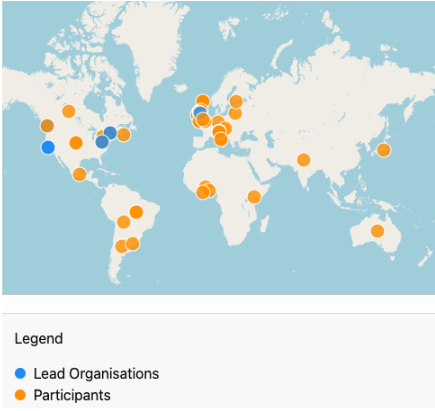
But we know we’ve only just scratched the surface, which you can see in the map below. We need your help to identify examples of projects that demonstrate participatory, inclusive and impactful ways to bring citizen voices to the table in shaping AI.
We are only four weeks from the first public release of the PAVE Case Book of Participatory AI Voice and Engagement projects. This is happening online and at a number of in-person events in Geneva around the UN Global Dialogue.. including a dedicated stand for a four-day exhibition at AI for Good.
Nominate or submit a project to the case book
It takes just a few minutes to nominate a case (just share a URL and a few brief details), and adding a full case entry should take no more than an hour if you have project reports or details to hand.
As the map below shows, we are still more able to amplify examples from Europe and North America than from Africa, Asia and Latin America.
We need help to redress this balance, which reflects our biases in terms of networks, language and prior knowledge. Please do help circulating the call for cases to networks in these parts of the world.
We’re happy to accept submissions in any language (although we may have to rely on machine translation for some of our analysis for the first release in July).
Expanding the frame: robotics, self-driving vehicles, smart cities & wider deliberations
One of the things that’s become apparent from our early work is that much public participation about artificial intelligence is not always framed in terms of AI.
We’re also interested in cases of participation and deliberation that generates messages that can speak to AI development and governance, which might also come from discussions about digital healthcare, robotics, self-driving cards, smart cities or many other topics.
Visualising the case book
We’ve also been experimenting over the last week with ways of display case book entries. Throughout the week of the AI for Good, we will be exhibiting the casebook work on: a large screen, table computers, tablets and printed materials, so we’re developing:
-
Public Voices Slideshow - a way of displaying recommendations and quotes from public deliberations across the world, and highlighting key features of the participatory processes that led to them.
-
Video Gallery - featuring subtitled films from participation projects. It’s been great to see many projects submitting videos from public engagement work, offering the chance to put the people affected by AI in the frame at Palexpo.
-
Case study browser - providing access to all the key details from the case book entries.
You can see some of the early prototypes we’ve been building below. Over the next week we’ll be working on adding some of the new PAVE branding and design to this, and iterating on ways to present material.
Preparing for the Expo
We’ve also been planning other aspects of our Expo booth, with some of the main graphics already sent off to print, and furniture orders agreed.
Over the next fortnight we’ll be doing more work to make sure the PAVE booth acts as a vibrant hub for different groups working on citizen voice in AI.
Don’t forget to add to the case book
Thanks for reading this far. As a reminder, we’re keen to make sure we have examples from all over the world in the case book - so if you’ve got a project that should be on the screens in our Expo space, make sure you submit it soon!.