Make sure you are subscribed to receive future updates by e-mail.
In brief:
- Next ‘Road to Geneva’ workshop in Basel (20th October): Register to join us at Casa Bethesda to explore Swiss and European community assemblies ahead of the 2027 Geneva AI Summit. Travel support is available within Switzerland.
- Read: AI overlords say they want to democratise their technology. Here’s how from Richard Wilson and Clara Long in The Guardian - reflecting on Utah’s recent Citizens Assembly and visions for global deliberation.
- Update: October Toolkit Co-Design Sprint kicked off: Our international cohort of 10–15 practitioners, deliberative designers, and educators has begun a five-week sprint to co-create the open Community Assembly Toolkit on AI.
- Review: Read the workshop write-ups: Synthesis and post-it analysis from our sessions in San Francisco (Gray Area), Washington DC (ASU / CSPO), New York (The Sidebar @ UNGA), and our online kick-off.
- Read-out: Mobilising resources for democratic AI: Read the five key messages from our funder roundtables held in SF (hosted by the Swiss Consul General) and NYC (at the Ford Foundation Center for Social Justice).
- Looking back: Check out the new ‘history’ page on the website to learn about the origins of the Citizens’ Track.
The Road to Geneva: Join us in Basel on 20th October
Tim, Octavia and Susan are in Switzerland this week as part of our preparations for the 2027 Geneva AI Summit taking place next June. On Tuesday, we’ll be in Basel exploring how to build connections with existing public engagement led by Swiss stakeholders, and exploring how the Community Assembly on AI toolkit could be used both in Switzerland and around the world in the run up to next year’s Summit.
[Basel Workshop] Community Assembly Co-Design: How can we involve everyone in conversations about the future of AI?
🗓️ Date: Tuesday, 20th October 2026
⏰ Time: 09:00 – 13:00 CET (followed by lunch)
📍 Location: Casa Bethesda, Gellertstrasse 156, 4052 Basel, Switzerland
🎟️ Registration: Sign up via the online registration form
This in-person gathering will test the draft modules from our October co-design sprint, share precedents from local Swiss initiatives, and explore practical plans to host a network of community assemblies across Switzerland and neighboring regions leading into Geneva 2027.
Note: We are able to provide travel support (such as SBB train fares or mileage reimbursement) for participants traveling within Switzerland. If support would make it possible for you to attend, please email tim@connectedbydata.org.
Taking Public Voice from Local Dialogue to Global Governance
September was an intensive month for the Citizens’ Track on AI. Across four co-design workshops, two roundtables, and countless bilateral conversations in San Francisco, Washington DC, and New York alongside the UN General Assembly, we set out to answer two interconnected questions:
- How do we make community conversations about AI accessible, grounded, and empowering?
- How do we ensure that what local communities say actually travels upwards to shape industry decisions and multilateral governance?
As conversations about AI continue to be dominated by industry hype, geopolitical races, and closed-door negotiations, the case for structured, bottom-up public participation has never been clearer or more urgent.
Read on for an overview of what we’ve learned over the past month, where we are heading next, and how you can get involved.
Learning from our September Co-Design Workshops
Ahead of our October toolkit sprint, we brought together more than 80 grassroots organizers, AI researchers, civil society leaders, and deliberative practitioners across four distinct sessions:
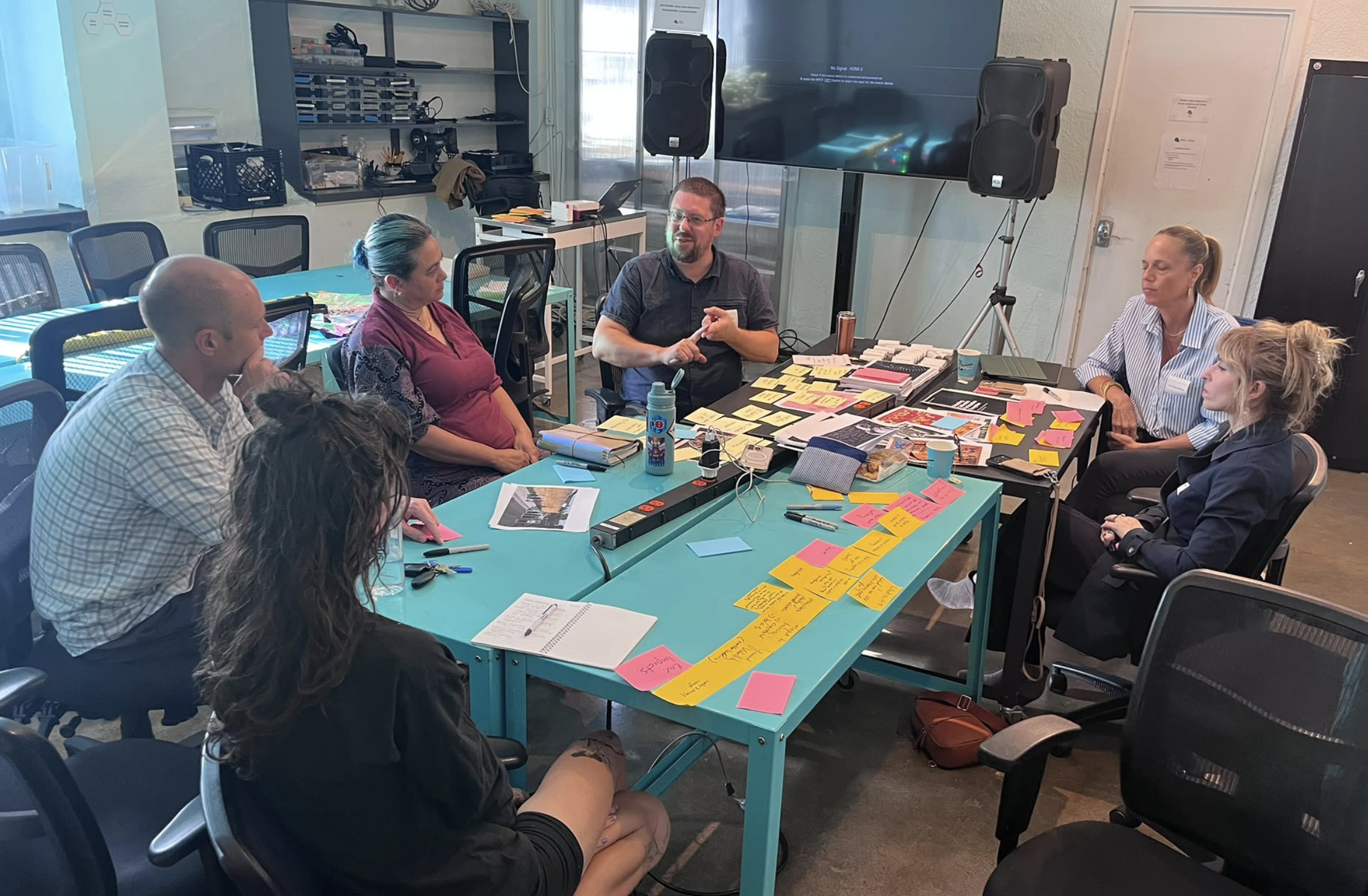
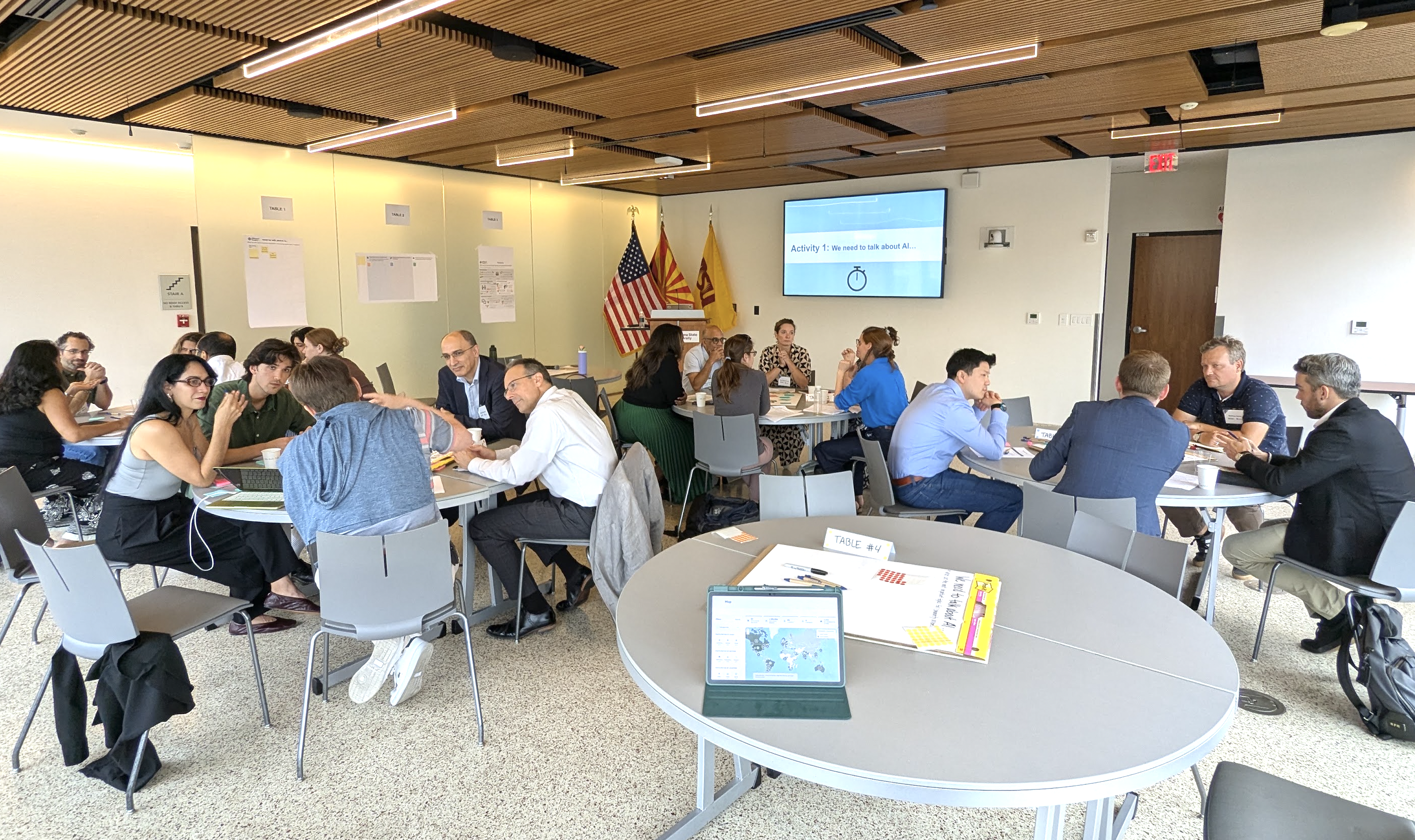
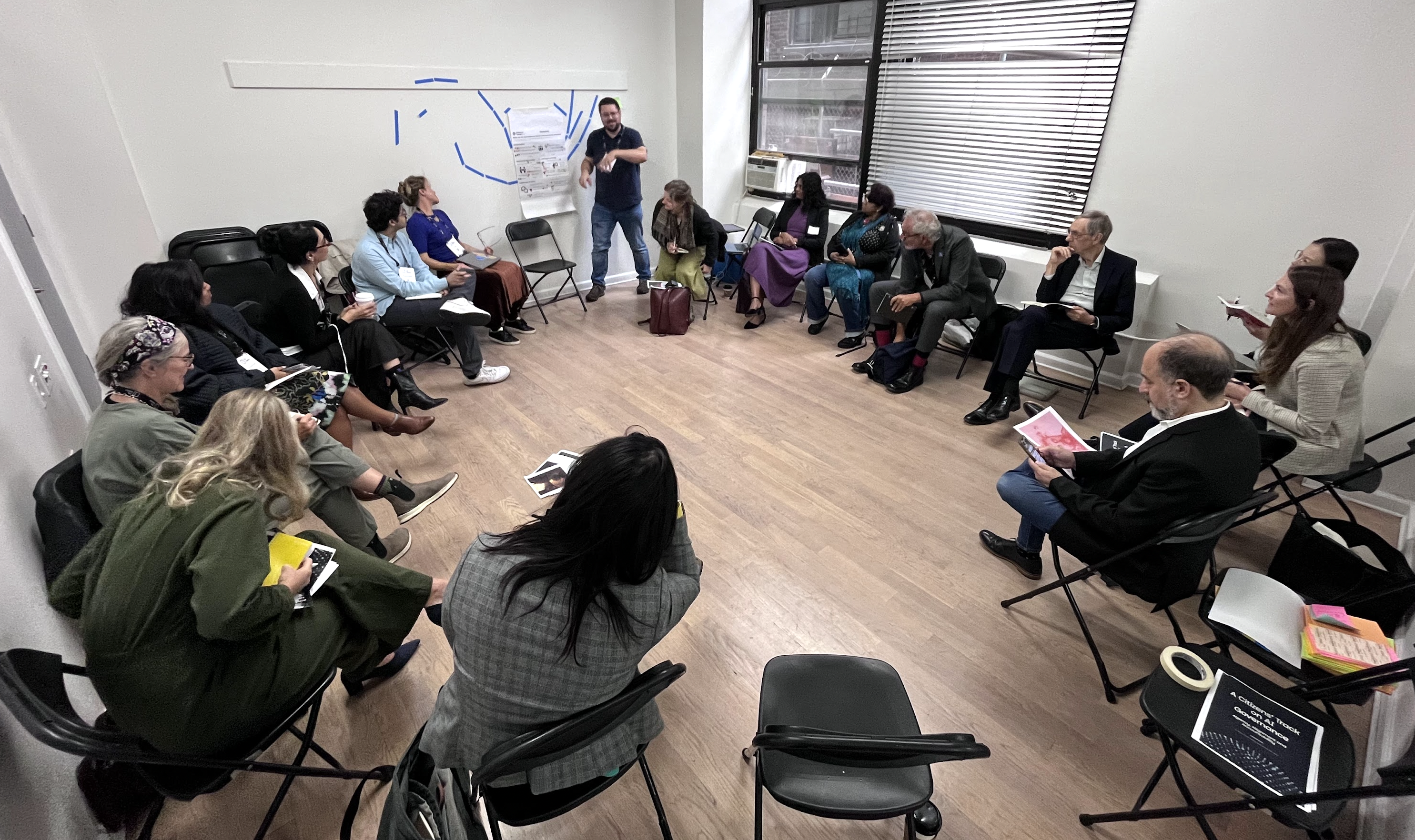
You can read reports from each of the sessions below:
- 📄 Global Online Briefing Summary
- 📄 San Francisco Workshop Notes
- 📄 Washington DC Workshop Notes & Synthesis Matrix
- 📄 New York City / UNGA Sidebar Write-up
Each session provided a distinct set of insights into the priority topics, participation methods, and design considerations for productive community dialogues on AI. One common theme was the importance of ending sessions with a sense of the actions that can and should be taken: whether through sharing messages for industry and government stakeholders, or through equipping participants to understand local actions that could be taken, such as:
- Demanding public procurement standards and community audit rights before local governments or school districts buy commercial AI systems;
- Focussing on environmental transparency and zoning oversight over data center developments;
- Establishing redress pathways so residents can question automated public-service decisions with real human beings;
- Supporting community-led and public-interest open-source AI tools and changing the default settings on the AI tools we use;
Roundtables in San Francisco and New York: Mobilising Resources for Democratic AI
Alongside community workshops, the Citizens’ Track on AI partnered with the Iswe Foundation, the Consulate General of Switzerland in San Francisco, the Global Partnership for Sustainable Development Data (GPSDD), and the Trust, Accountability and Inclusion Collaborative (TAI) to convene two roundtables on resources for democratic AI governance.
Held under the Chatham House Rule in San Francisco and at the Ford Foundation Center for Social Justice in New York, these discussions brought together philanthropic foundations, international institutions, and participatory AI practitioners to explore how to advance the field of participatory AI.
As summarized in our recent post on mobilizing resources for democratic AI, five key insights framed the discussions:
- A vibrant field already exists: The Public AI Voice and Engagement (PAVE) Case Book documents over 80 existing participatory AI initiatives across five continents. The blueprint of the Citizens’ Track demonstrates viable pathways to connect these localized efforts to international bodies like the UN and the Geneva AI Summit.
- Public participation is essential to Public AI: Funders seeking to build “Public AI” or “AI for Good” cannot succeed through technical development alone. Democratic participation generates public legitimacy, shifts public sector procurement demand, and moves public debate from reactive backlash to proactive design of shared public goods.
- Democratic AI is central to broader democratic renewal: Governing powerful technologies is inseparable from defending democratic culture against corporate concentration and authoritarian capture.
- Funders need a collective learning agenda: Many traditional democracy, human rights, and social justice donors are still determining how to approach AI. Deliberative pilots offer funders and frontline partners a practical space to test “what works” together.
- There is an urgent window for rapid resourcing: Regulatory frameworks and technical standards are crystallizing now. If public participation is not resourced immediately, elite and industry-led settlements will lock in for a generation.
The Community Assembly Toolkit: October Sprint Underway
Following an open application process, we have kicked off our October Co-Design Sprint to create the first version of the Community Assembly Toolkit on AI.
A global cohort of nearly 30 practitioners—spanning deliberative design, critical AI literacy, popular education, and grassroots community organizing—is have met three times now to explore the creation of a resource that will ultimately contain:
- Facilitator Guidance: Guidance on venue selection, participant outreach, welcoming diverse community members, and establishing constructive dialogue agreements;
- Thematic Deliberation Modules: Plug-and-play activities covering AI 101/Foundations, AI Safety, Language and Diversity, AI Infrastructures, and AI Governance.
- Feedback and Action Frameworks: Structured templates to capture local community demands and feed them into municipal governance, national policy consultations, and international summits.
We’ll share news of the first release of the toolkit to all mailing list subscribers in November.
Coming Up
We’ve got lots more underway for the month ahead. Look out for:
- The new Citizens’ Track on AI logo and brand (CT//AI)
- New team pages on the website, sharing more about the people behind the project
- Updates on the Community Assembly Toolkit, and how you can organise your own community assembly on AI
- A new call for submissions to the PAVE Case Book
We’re also refreshing our supporters page so if you would like to see your organisation listed, please fill in this quick form.